
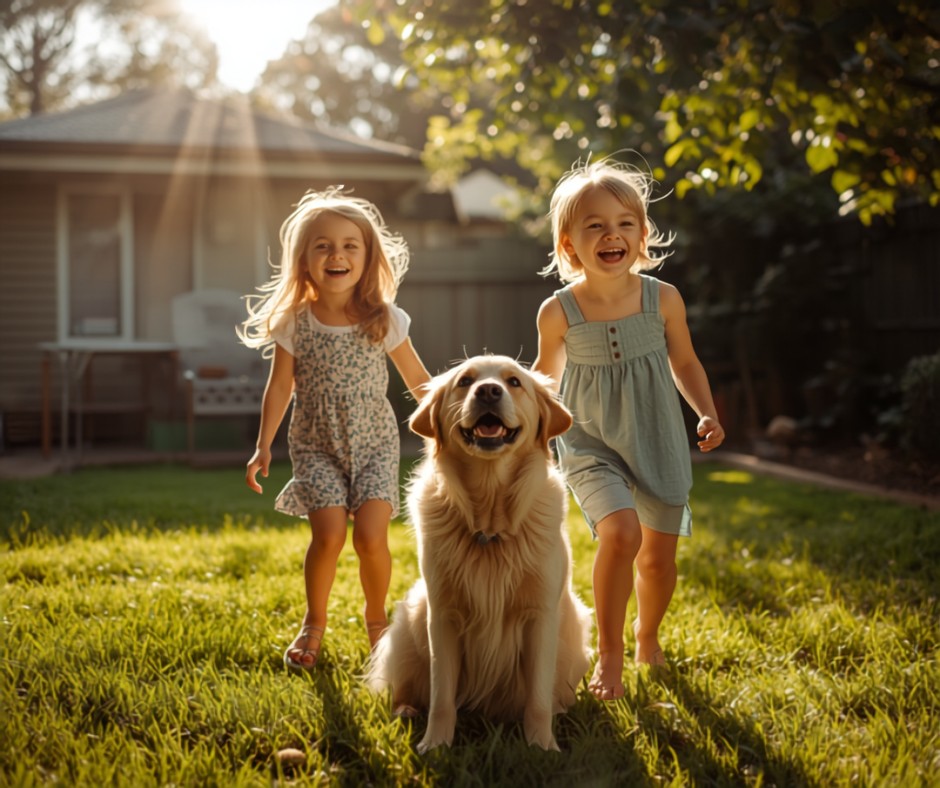
At some point in almost every Brisbane family, the question arrives. It usually comes from the back seat of the car. “Can we get a pet?” And then it comes again. And again. And again.
The honest truth is that the right pet can be one of the best things you add to your family. Kids learn responsibility, empathy and that beautiful thing that happens when an animal just loves you unconditionally. The wrong pet, though, is a lot of work, a lot of money and potentially a source of ongoing guilt for everyone involved.
So before you say yes to those puppy dog eyes (literal or metaphorical), here is an honest guide to the most popular family pet options and what they actually involve for Brisbane families.
Dogs
Dogs are the most popular family pet in Australia for good reason. They are loyal, playful, and genuinely great for kids. A dog will get your children outside, teach them about routine and responsibility, and give you all something to love fiercely.
Best for: Active families with outdoor space, kids aged 5 and up (younger kids need supervision), families who are home regularly.
Brisbane considerations: Our hot summers mean you need a breed that handles heat well. Avoid flat-faced breeds like bulldogs and pugs in Brisbane’s climate. Great family-friendly options that cope well with Queensland heat include Labradors, Golden Retrievers, Staffordshire Bull Terriers and Australian Cattle Dogs.
What nobody tells you: Dogs are a 10 to 15 year commitment. The puppy phase is genuinely exhausting and expensive. Budget for vet costs, food, grooming, boarding when you travel and training. It adds up fast. That said, most dog owners will tell you it is completely worth it.
Cats
Cats are a slightly lower-maintenance option and often a better fit for families where both parents work full-time. They are independent, clean and can be wonderfully affectionate on their own terms.
Best for: Families with less outdoor space, busy households, kids who are a little older and calmer around animals.
Brisbane considerations: Queensland councils require cats to be microchipped, desexed and registered. You also need to keep cats indoors at night to protect local wildlife. An indoor cat or a cat with a secure outdoor run is the safest and most responsible setup.
What nobody tells you: Some cats are absolutely not interested in children and will make that very clear. If you are getting a cat for the kids, look for a breed known for being social and patient, like Ragdolls, Burmese or British Shorthairs. A cat from a rescue is often a great option as their personality is already established.
Backyard Chickens
This one is having a serious moment in Brisbane right now and honestly, we get it. Backyard chickens are brilliant for kids, great for the garden, and they give you eggs. That is a pretty good deal.
Best for: Families with a backyard, kids of any age, households that want a pet with practical benefits.
Brisbane considerations: Brisbane City Council allows up to 6 hens (no roosters) in residential areas without a permit. You need a secure coop to protect them from neighbourhood dogs, cats and the occasional python. Bantam breeds like Silkies and Pekins are particularly kid-friendly as they are small, gentle and incredibly fluffy.
What nobody tells you: Chickens need daily care (feeding, water, egg collection) but are otherwise very low maintenance. They are brilliant for teaching kids about where food comes from. Most children are absolutely delighted by a chicken that will eat from their hand. And fresh eggs for breakfast every day is genuinely one of life’s simple pleasures.
Fish
Often suggested as a “starter pet,” fish are a bit more involved than people expect, but they are genuinely calming and beautiful to have in the home. There is real research showing that watching fish reduces stress, which, if you have children, is relevant information.
Best for: Families in smaller homes or apartments, kids who are interested in nature and animals but not ready for a high-need pet, families with allergies.
Brisbane considerations: Our warm climate means tropical fish thrive here without needing a heated tank. A simple freshwater community tank with species like neon tetras, guppies or danios is a great starting point. Avoid goldfish in bowls, they actually need a proper filtered tank to be healthy.
What nobody tells you: Fish do not cuddle back, which matters to some children more than others. A Siamese fighting fish (betta) in a proper tank can be a great solo pet for an older child who is interested in caring for something themselves.
Birds
Budgies, cockatiels, conures and rainbow lorikeets are all popular choices for Brisbane families. Birds can be incredibly social, entertaining and some species can even learn to talk or whistle tunes.
Best for: Families who are home a lot, kids aged 6 and up, households that enjoy interaction and personality in a pet.
Brisbane considerations: Wild lorikeets are everywhere in Brisbane but you cannot keep a wild-caught bird. If you want a lorikeet or other parrot species as a pet, it must be captive-bred and sourced from a licensed breeder. Budgies and cockatiels are the most beginner-friendly options.
What nobody tells you: Birds can be noisy. Really noisy. And some parrots bond so strongly to one person that they become aggressive toward others. Do your research on the specific species before committing. A well-socialised budgie though? Absolute joy.
Reptiles
Reptiles are increasingly popular with Brisbane families, particularly for kids who are fascinated by animals and want something a bit different. Bearded dragons in particular have become one of the most popular family reptiles in Queensland.
Best for: Kids aged 8 and up who are genuinely interested in reptiles, families who prefer a quieter, lower-allergen pet, households with the budget for the setup costs.
Brisbane considerations: In Queensland you need a Recreational Wildlife Licence to keep a reptile as a pet. Popular species for families include bearded dragons, blue-tongue lizards and some turtle species. All must be sourced from licensed breeders, never taken from the wild.
What nobody tells you: The setup cost for a reptile enclosure with proper lighting, heating and humidity control can be significant. Bearded dragons also eat live insects, which some parents find more confronting than the reptile itself. Once the setup is done though, they are fascinating, handleable and surprisingly interactive pets.
Guinea Pigs
Guinea pigs are one of the most underrated family pets. They are gentle, social, do not bite and are the perfect size for small hands. They are also genuinely sweet little characters with big personalities.
Best for: Kids aged 4 and up, families who want a small, handleable pet, households that are not ready for the commitment of a dog or cat.
Brisbane considerations: Guinea pigs need shade and good ventilation in Brisbane’s summer heat. They do not tolerate temperatures above 28 degrees well, so their enclosure needs to be in a cool spot or brought inside during heatwaves. They are social animals and are happiest in pairs.
What nobody tells you: Guinea pigs have a lifespan of around 4 to 8 years, which is manageable but long enough to be a real commitment. They also need their cage cleaned regularly. The upside is that daily care of a guinea pig is a genuinely achievable responsibility for primary school-aged kids.
So Which One Is Right for Your Family?
The honest answer depends on your lifestyle, your space, your budget and your kids’ ages. Here is a quick cheat sheet:
- Want maximum love and fun, have outdoor space and time: Dog
- Want a lower-maintenance companion, kids are calmer: Cat
- Have a backyard and want eggs as a bonus: Backyard chickens
- Smaller space, love the idea of a living thing to care for: Fish
- Home a lot and love personality and interaction: Bird (budgie or cockatiel to start)
- Older kids, interested in something different: Bearded dragon
- Young kids wanting their first pet to care for: Guinea pigs (a pair)
Whatever you decide, involve the kids in the research process. Let them learn about the animal, visit breeders or shelters, and understand what the daily care actually looks like before you bring it home. The families who do this almost always end up with happier pets and more committed kids.
And if they are still asking for a horse after all of that? That is a separate conversation entirely.
 Brisbane Family Life